Proposed gesture shell study
The six-surface contact sheet, motion storyboard, route map, and Palm motion research are original planning artifacts. Every phone frame uses 568×1232 logical pixels, shown at 50%; the current scale is 1 logical pixel to 1 panel pixel. They propose no permanent top navigation rail and no Back/Home footer. Small bottom/top handles indicate gesture origins. The Apps drawer rises from the live-card Home, the notification shade falls from above, and Settings lives inside the shade. The old bar exists solely in the installed development/rollback session. These frames do not show shipped software or prove physical motion, reach, scanout or optical contrast.
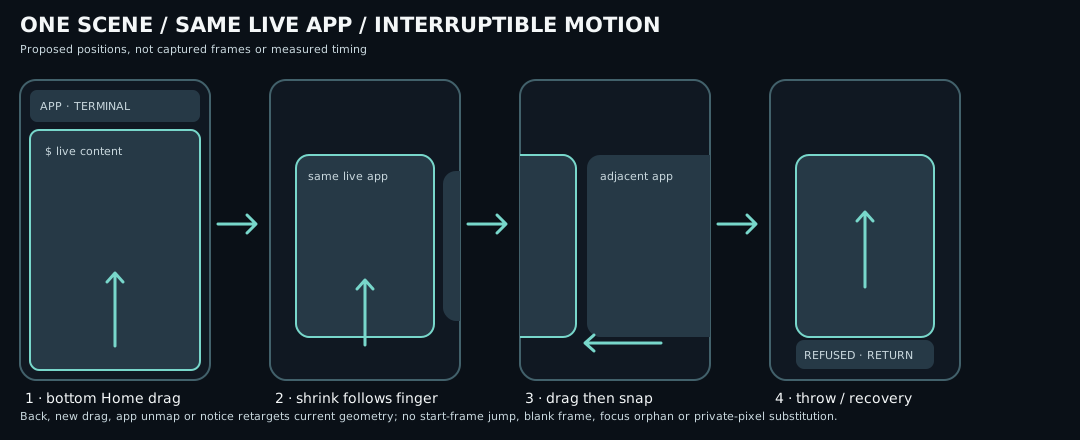
The final Home is the live card deck, including a useful empty deck with a drawer cue. From an app, a bottom-edge upward gesture shrinks the app into that deck. From the deck, a continued upward pull reveals all installed apps. Horizontal card swipes, tap expansion and recoverable upward throw-close remain direct. A top-edge downward drag reveals notifications and Settings. Contextual inward Back dismisses a shell surface or keyboard; it is not a synthetic universal command to arbitrary Wayland apps. The keyboard owns its touch region, so real-glass trials must find and prove a non-conflicting escape. Optional large controls belong in deliberately opened Help/accessibility aid, not persistent chrome.
The symbolic Terminal, Monitor and Video icons in the drawer, card header, and notification example are original schematic placeholders, not copied theme assets or proof of the installed icon set. Implementation resolves each installed desktop entry’s Icon through the image’s icon theme for drawer rows, eligible card headers and trusted app notifications, with bounded cache, fixed geometry, a neutral fallback and a text label. A private card reveals neither title nor app-specific icon. The separate design study site may show licensed real icons, but those are also planning illustrations until the image implements the resolver.
The interaction inspiration is the Palm Pre User Guide, especially pages 19–20, 23–26 and 32–33 for card, launcher, scroll and notification movement. The archived HP webOS developer notification guide describes brief banners and deferred dashboards; this is a third-party archive. Android’s app navigation guide supplies only a comparison for bottom app access, while Android’s gesture-compatibility guide motivates explicit system/app gesture arbitration. No phone reference provides K230 animation timing or hardware proof. No Palm imagery or television webOS pattern is copied.
Board grounding remains the current shell spec, portrait image evidence, keyboard touch evidence, and selected card composition architecture. The final gesture layout, icons, card motion, shade, edge arbitration, and real-glass recovery are UNVERIFIED. The board has no established battery capability in this work, and no vibration work is planned. Loading, empty, stale, error, confirmation and cancellation states keep a clear next gesture or contextual action; the physical acceptance tasks record which routes actually work.