First integrated Rust shell on the board
Observed 2026-09-24. Source cd06bee4 produced the system and exact identities
in result.json. The coordinator held the board/serial lock,
exported 76 new store paths (171,004,000 bytes), and imported them over the
existing Wi-Fi connection using a temporary single-artifact HTTP transfer.
No image flash or readback occurred; credentials and transport addresses stay
outside Git. A transient Wi-Fi link drop recovered with the saved profile,
a new DHCP lease, and a successful interface-bound outbound ping.
A five-minute root systemd rollback timer targeting the prior system was
confirmed active before switch-to-configuration test. Activation returned
zero. shell, shell-ui, shell-session-bus, shell-notifications, and
k230-wifi were active. The timer was cancelled after native UI capture and
initial user interaction; the previous boot profile remains the reboot
fallback because this activation used test, not a persistent boot switch.
These 568×1232 native grim captures were visually reviewed:

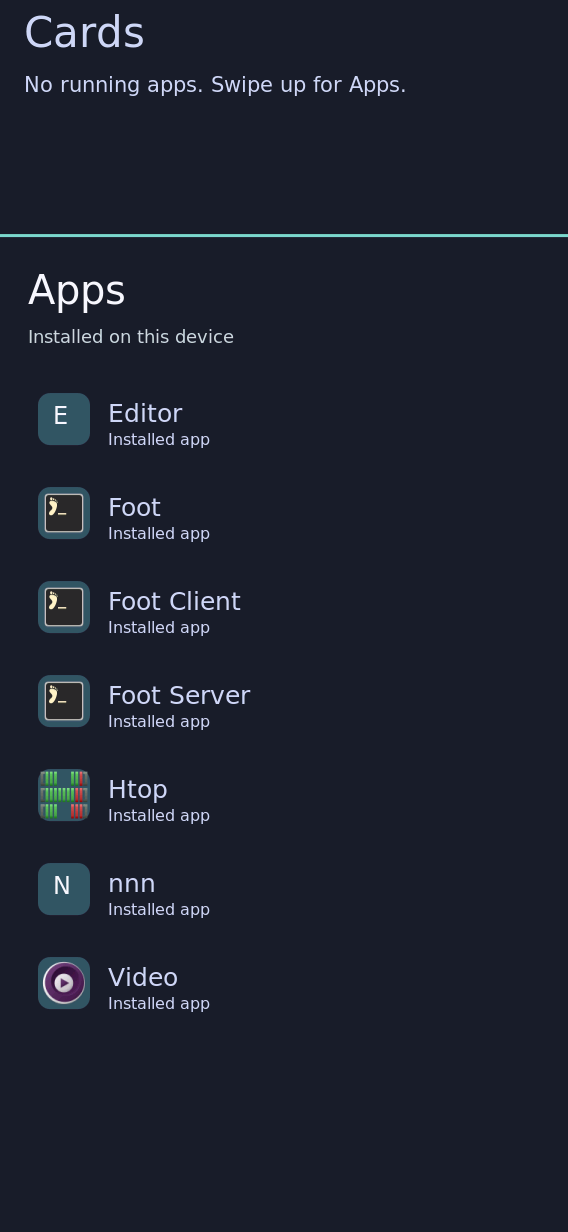
Commands use the exact store paths in the adjacent result and omit private transport details:
systemd-run --unit=k230-coherent-restore --on-active=300s \
  --timer-property=AccuracySec=1s "$previous_system/bin/switch-to-configuration" test
systemctl is-active k230-coherent-restore.timer
"$new_system/bin/switch-to-configuration" test
systemctl is-active shell shell-ui shell-session-bus shell-notifications k230-wifi
runuser -u shell -- env XDG_RUNTIME_DIR=/run/shell \
  WAYLAND_DISPLAY="$discovered_display" grim /run/shell/coherent-start.png
The user reported that the shell seemed usable but needed design work, then
found two blocking navigation defects: the pulled-down notification shade
could not be dismissed and selecting another app card left the previous app
visible. The coordinator dismissed the shade through the existing Rust
--surface hide route. Both defects require fixes and repeat checks; this
checkpoint does not close physical acceptance or the coherent-shell
proposal. Settings and notification actions are still an unfinished surface
in this installed revision. These captures prove native compositor pixels,
not camera-visible presentation timing or performance budgets.
Navigation correction installed and user checked
The combined correction built from integrated source 8d231e7b with:
nix build .#nixosConfigurations.k230-coherent-shell.config.system.build.toplevel \
  --max-jobs 1 --cores 4 --no-link --print-out-paths
PASS: /nix/store/ni904kvqycv8v893wp6i1agskgck821d-nixos-system-nixos-26.11.20260919.20b1ddd.
A 23-path, 10,376,208-byte delta imported successfully over Wi-Fi. A new
five-minute fallback timer was confirmed active before test activation.
Activation returned zero; the current system matched the target and shell,
Rust UI, session bus, notifications, and Wi-Fi were active. The fallback
timer was then stopped, leaving the corrected preview running.
The fixes add upward-swipe dismissal to the shade and raise the selected
floating window after focusing it. Exact old/new QEMU negative and positive
results are in docs/evidence/coherent-shell/rust-shade-dismiss-qemu/README.md
and docs/evidence/card-shell/focus-raise/README.md.
After being told the combined update was installed and to retry shade dismissal and window selection, the user reported: “that worked perfectly”. This is user-reported on-device acceptance of the navigation update, not a new camera recording or complete acceptance of every shell requirement. The initial screenshots above still depict the earlier preview. Settings, notifications, theme-choice UI, broader design and motion work remain open. The running update is still a test activation with the original boot profile retained until the integrated milestone is ready for persistent activation.