Installed keyboard gesture candidate
Observed 2026-09-24 UTC on the physical board. Source e9d3bd6c built with
nix build .#nixosConfigurations.k230-coherent-shell.config.system.build.toplevel --max-jobs 1 --cores 4 --no-link --print-out-paths.
The exact system and running Sway/Rust binaries are in installed.json.
The named narrow hint package command also passed from this same production
source: nix build .#handheld-shell-rust --max-jobs 1 --cores 4 --no-link --print-out-paths,
output /nix/store/a4gdwfmr79pf6yfvq24wmqi495mdm4mg-k230-shell-rust-riscv64-unknown-linux-gnu-0.1.0,
derivation /nix/store/466mi8pv9nm0m1g1ps0x72l9bhvq9q3j-k230-shell-rust-riscv64-unknown-linux-gnu-0.1.0.drv.
The flake’s standalone package and the NixOS module use distinct package
contexts: this narrow output is not claimed to be the installed b3qdp…
executable, which was built by the full-system command and read from the
running process. The dark/light hint captures remain separate QEMU evidence.
The matching coherent image is a separate host artifact; it was not flashed or selected for boot here.
Under the exclusive board reservation, 27 additional store paths (10,961,320
NAR bytes) were imported with exit 0. The new system’s
bin/switch-to-configuration test exited 0. A five-minute transient rollback
timer targeted the previous test system before activation. Console checks
used readlink -f /run/current-system, the running process /proc/PID/exe
links and systemctl is-active shell shell-ui shell-session-bus shell-notifications k230-wifi k230-wifi-settings.
All six services were active. After reviewing the captures below, the timer
was stopped and the candidate identity and shell services were checked again.
Raw transport/service output remains private; the committed record contains
only the allowlisted identities and outcomes.
| State | Native board capture | Method |
|---|---|---|
| Terminal, keyboard hidden | Terminal | Fresh shell session after activation |
| Keyboard and dismissal handle shown | Keyboard | pkill -USR2 -x wvkbd-mobintl as the shell user |
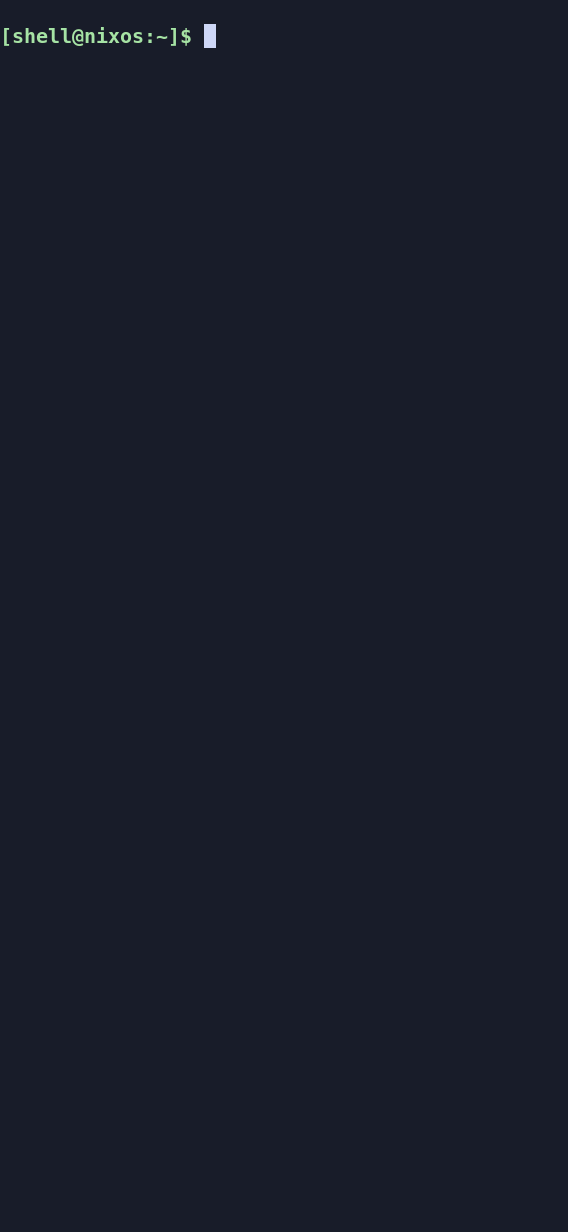
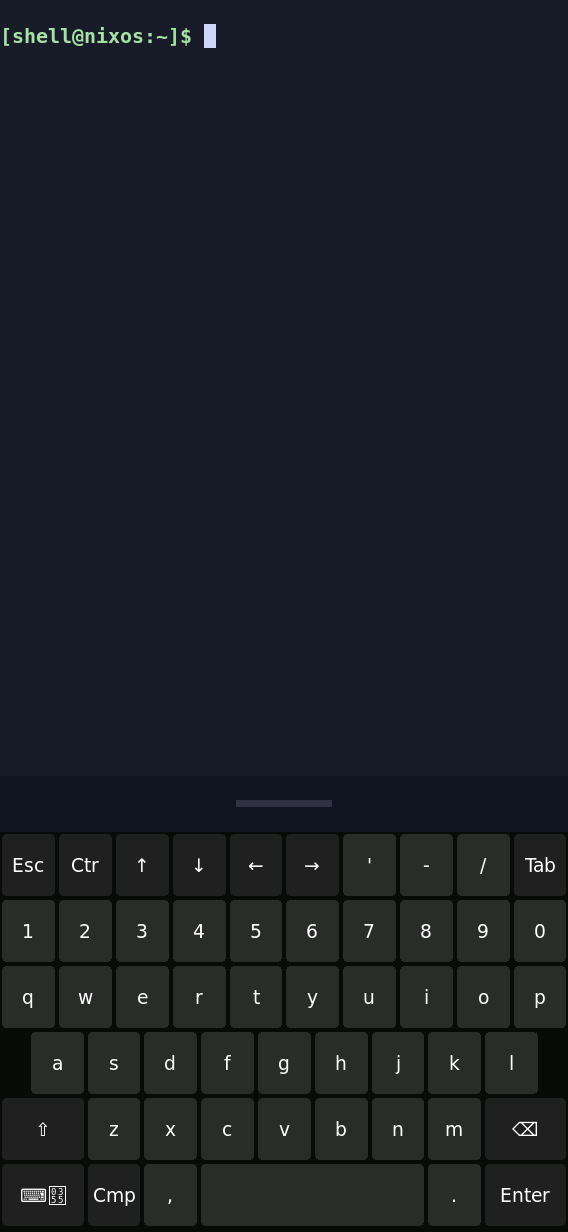
Both unedited 568×1232 PNGs were captured with the installed grim against
the active Wayland display, transferred over the reserved console, and
visually inspected before publication. They show the actual board compositor,
not the panel through a camera. No gesture was injected or performed by a
person for this record. The shown keyboard was requested by its lifecycle
signal. The handle is present but its dark-theme stroke has weak contrast;
a follow-up source correction is being prepared.
The installed candidate also includes the new Wi-Fi Settings UI, actual
wallpaper preview, quieter card chrome, and the previously installed app grid
and direct carousel. This activation alone does not prove their on-glass
behavior or real Wi-Fi association/persistence. The Settings keyboard hint has
separate dark/light native QEMU evidence.
User two-finger show, grip hold/reverse/hide, typing, perceived motion and
workload budgets remain open. No reboot was performed and boot files/profile
were not changed by this test activation. The previous boot selection remains
the reboot fallback. A manual session rollback uses the previous system path
in installed.json followed by /bin/switch-to-configuration test.