Physical-board Settings volume-layout qualification
On 2026-10-01 the full coherent system built from source
5bb67db128210f830dab4de0d20a4b0eca13c578 activated in runtime test mode
and ran the exact new shell executable. result.json records nine
PASS checks, three capture hashes, system/client/helper identities and the
immediate restoration command. trial.py contains the executed test.
The built system is
/nix/store/p1a1hz9n8s4g8qyr55ffl3dzbnjgqwr8-nixos-system-nixos-26.11.20260919.20b1ddd;
its client is
/nix/store/3hy6h165ii649z6vjzjd36jwg16d37rc-k230-shell-rust-riscv64-unknown-linux-gnu-0.1.0/bin/k230-shell-rust.
The coordinator built it in the sole build slot with:
nix build "git+file://$REPO?rev=5bb67db128210f830dab4de0d20a4b0eca13c578#nixosConfigurations.k230-coherent-shell.config.system.build.toplevel" \
  --no-link --print-out-paths --max-jobs 1 --cores 6
A protected transport supplied its missing closure registration/store contents, then root executed the script on the reserved serial console:
/nix/store/v189xydz6qkcd4cbkixcmv91w8hbc560-python3-riscv64-unknown-linux-gnu-3.14.7/bin/python3 \
  /root/tmp/k230-settings-controls/trial.py PROTECTED_EVIDENCE_ENDPOINT
An independent restoration timer was armed before switch-to-configuration test.
Configured kernel/initrd/modules matched the baseline. The exact live process
and all three shell/theme services passed inspection. Boot files and the
persistent system profile stayed unchanged. The timer was retired after successful
qualification; the new runtime remains available. This is not ordinary boot or
persistent boot-selection acceptance. Its restoration command is in the result.
The injected Linux uinput touch device uses the established
K230 Shell Gesture Test Source identity and logical panel coordinates. Before
tapping, the test checks actual native pixels to establish that the Settings
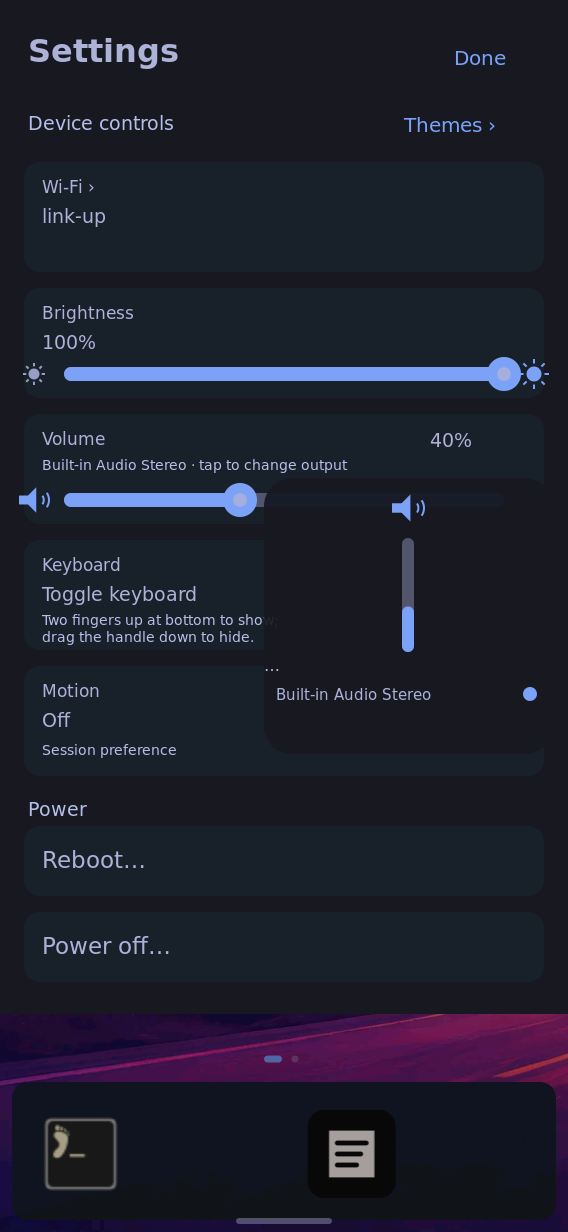
volume slider is loaded. Tapping (260,457) opens the expanded output picker:
its actual region changes and the reviewed capture visibly contains the real
Built-in Audio Stereo output. The volume track at y=500 changes the actual
PipeWire/WirePlumber sink; its previous level and mute state are restored.
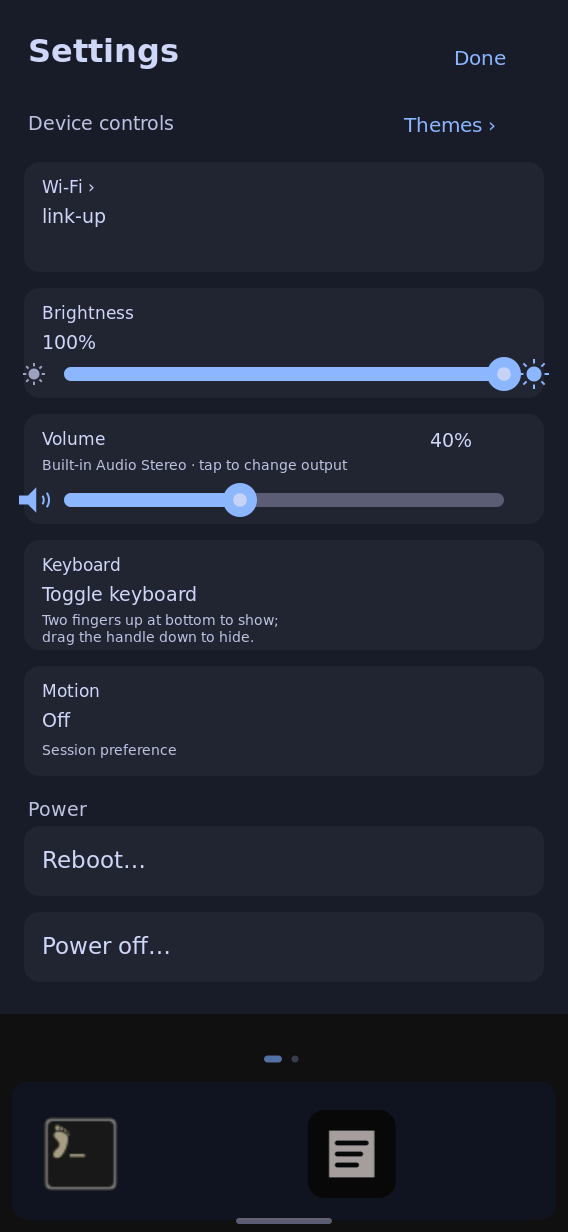
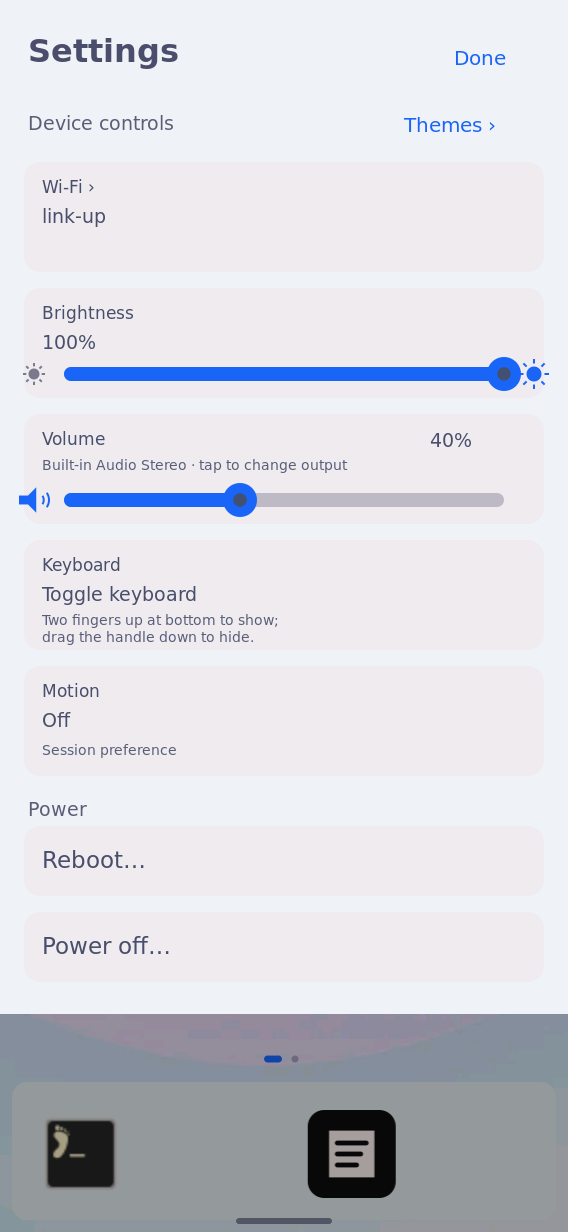
Both real appearance receivers accept dark/light transactions; the original
theme is restored afterward. The final shell, UI and helper services are active.
No headphones or acoustic output were tested.
The captures were privacy-reviewed: network state says only link-up; there
are no network names, passwords, addresses or private notification/window text.
They are native board captures with injected touch, not camera photographs or
new real-finger acceptance. Dark uses Catppuccin; light uses Catppuccin Latte.
The host renders in the parent directory use Flexoki Light and synthetic service
values, and remain a separate evidence class. Broader six-surface shell-polish
glass acceptance remains task 6.4.
Earlier harness attempts were corrected without changing the installed source.
The first expected wpctl in the system PATH; the test now uses its exact store
path and that failed attempt restored the prior runtime. An early picker capture
caught a transient Settings helper deadline, so a loaded-volume pixel precondition
was added. A later capture read the full journal before saving the short-lived
HUD and missed it. A separate immediate pointer capture showed the picker; moving
the native touch capture ahead of journal I/O then passed the stronger pixel
check. These earlier images are not presented as successful picker evidence.