Camera audit: initial-scene controls recording
Source: 20260922T223311Z-initial-scene-ready-controls.mp4
SHA-256: b9831514a542c77ac820a2e2fd4a611e817b50e7e3120e21cfeacf7416827420
ffprobe reports H.264, 1920x1080, 30/1 fps, and 65.000 s. The capture
manifest identifies a 30 fps /dev/video0 camera recording rotated 180° and
labels the control provenance as injected; it makes no real-finger claim.
Method
I reviewed the complete recording at 1-second cadence and made 2 fps contact sheets for the keyboard interval and the display-off/recovery interval:
ffmpeg -y -hide_banner -loglevel error \
  -i docs/evidence/splash-initial-scene-ready/20260922T223311Z-initial-scene-ready-controls.mp4 \
  -vf 'fps=1,scale=320:-1,tile=7x10' -frames:v 1 /tmp/controls-audit/all.jpg
ffmpeg -y -hide_banner -loglevel error -ss 6 -t 20 \
  -i docs/evidence/splash-initial-scene-ready/20260922T223311Z-initial-scene-ready-controls.mp4 \
  -vf 'fps=2,scale=480:-1,tile=5x8' -frames:v 1 /tmp/controls-audit/keyboard.jpg
ffmpeg -y -hide_banner -loglevel error -ss 26 -t 20 \
  -i docs/evidence/splash-initial-scene-ready/20260922T223311Z-initial-scene-ready-controls.mp4 \
  -vf 'fps=2,scale=480:-1,tile=5x8' -frames:v 1 /tmp/controls-audit/dpms-recovery.jpg
Observations
- During the requested keyboard-show interval, approximately 8–22 s, the
camera continues to show the portrait shell. The physical recording does
not resolve the keyboard key grid or labels at this distance and angle.
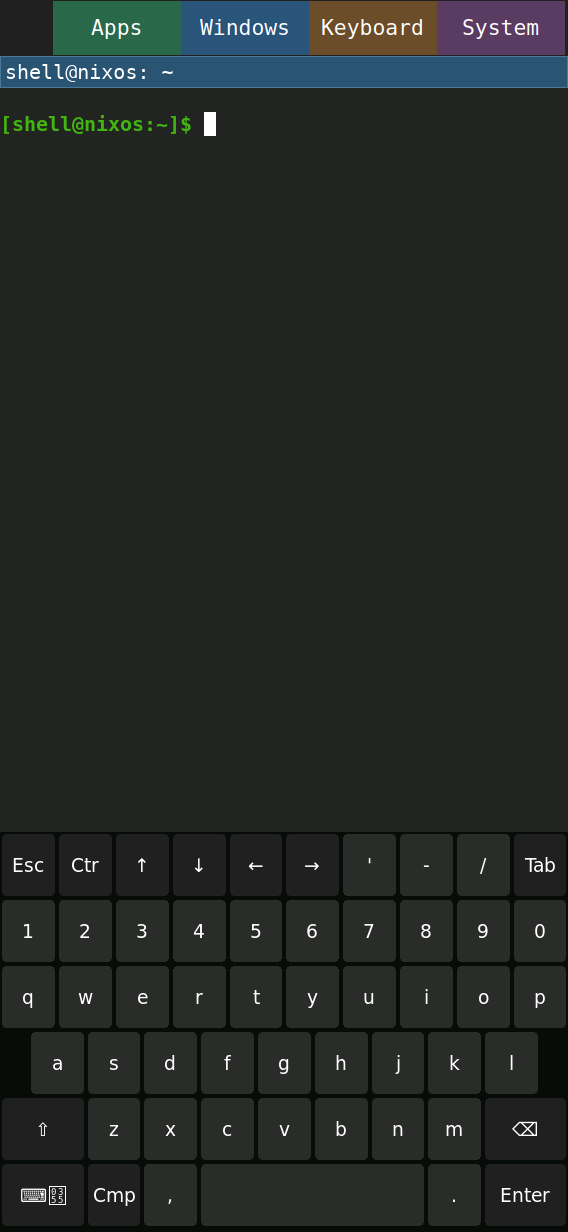
The native reference keyboard-native.png, SHA-256
cb6db86340520a8a1ec7bf6efa76bc40ce6bca085080982a9237fe6858ecc70e, shows the complete expected keyboard layout, but it is not physical-panel proof. - The panel is dark in the 2 fps samples covering approximately 29–32 s, matching the deliberate display-off interval.
- The shell top bar returns in samples around 32–33 s and remains visible
through the later recording, including the representative 38 s still
controls-recovery-38s.png, SHA-256
c0153647eb895d46e5a220986d181389d917fe1e6c808246a44dfd5fe46982b7.
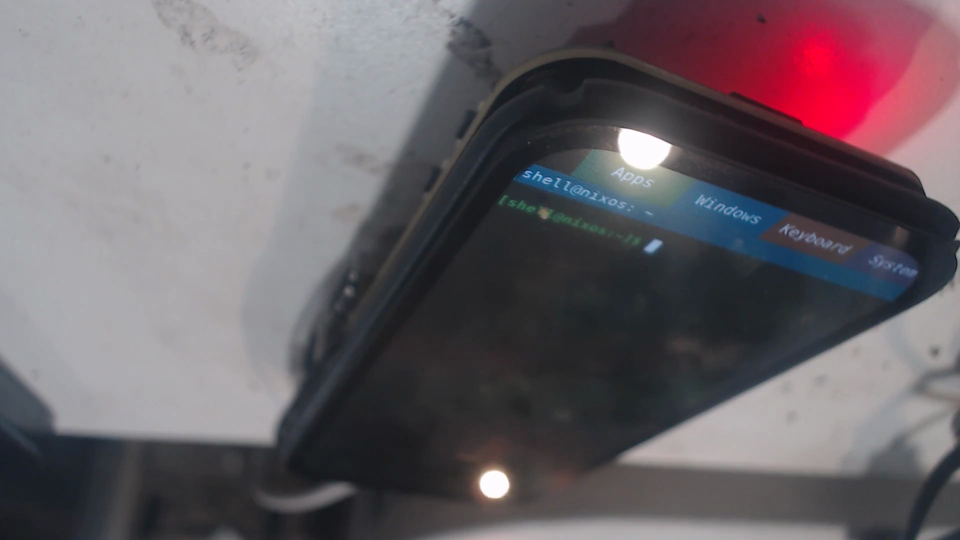
The camera therefore records visible recovery after the display-off interval. It does not measure DPMS latency, prove compositor state preservation beyond the visible result, establish touch accuracy, or distinguish injected input from real finger input. Glare and the oblique camera angle also prevent a complete physical keyboard geometry or label-readability claim.