Edge taps and Home return: installed board proof
Source 27110ccb2391100848461a59bccf4bbcd5a59430 is installed as the exact userspace and live component identities. The coordinator held /tmp/k230-board.lock, imported the 36 missing closure paths with SHA-256 verification, armed an independent seven-minute rollback timer, and switched userspace without flashing, changing the device tree or rebooting. shell-ui needed an explicit start after activation; all three shell/input services then reported active. The timer was stopped only after the live native input checks. The board reservation and temporary transfer server were released afterward.
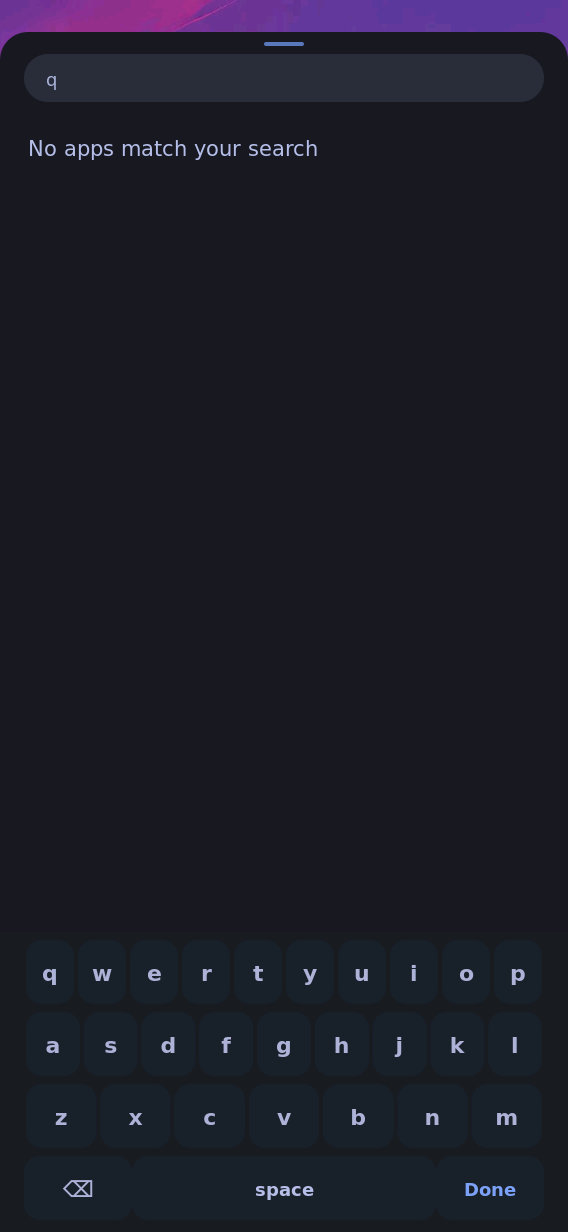
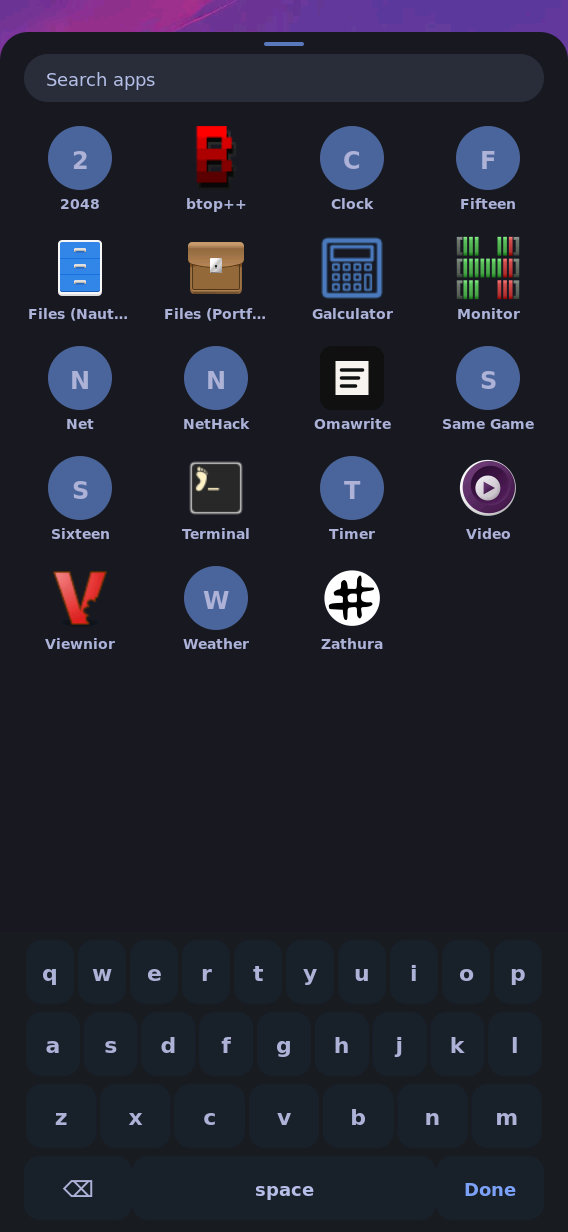
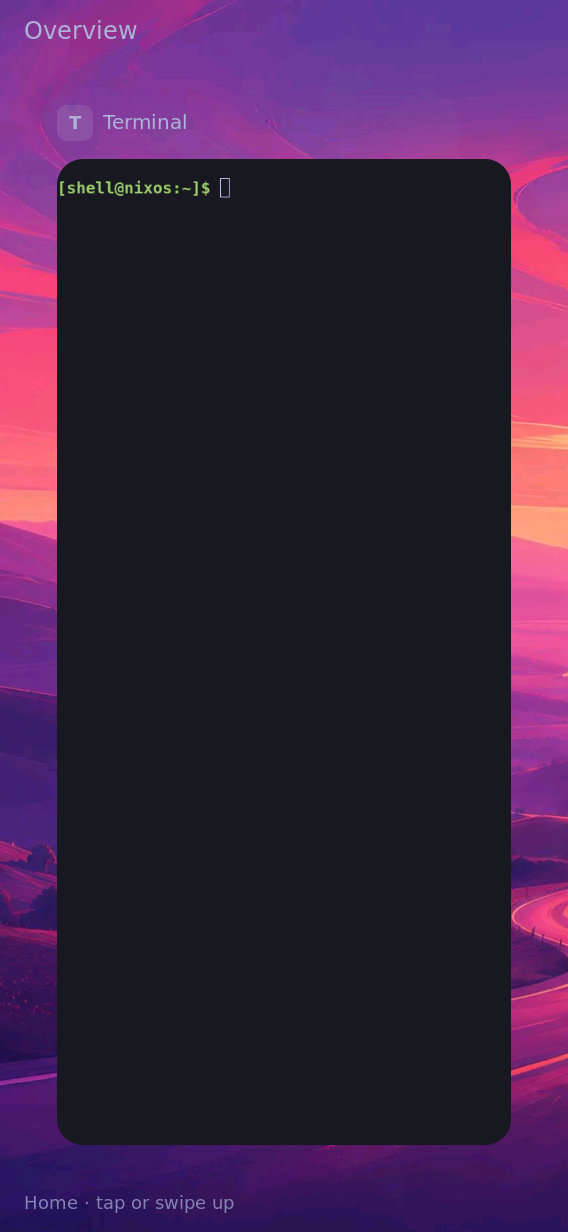
The repeatable uinput probe sends real Linux input-device events from a named synthetic direct-touch device, not IPC gesture shortcuts. Its actual Home bottom-handle tap enters overview. It then opens the actual Rust drawer, taps Search and q, and taps Backspace at (60,1214), inside the old stolen bottom edge band. The native images show the query change from q to empty, the app grid return, and the drawer staying open.
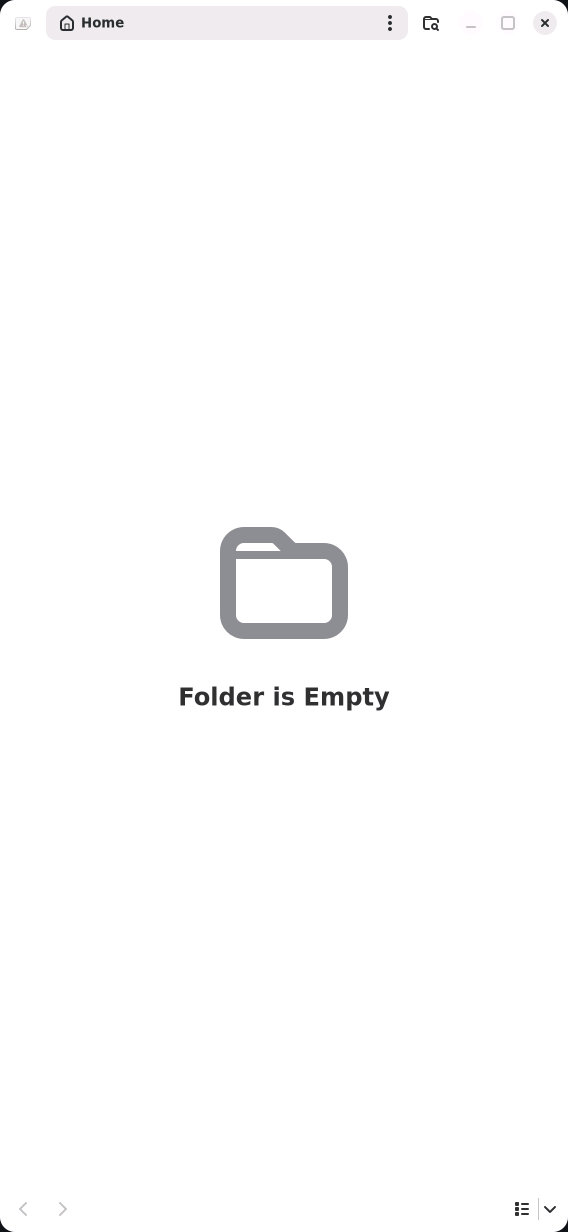
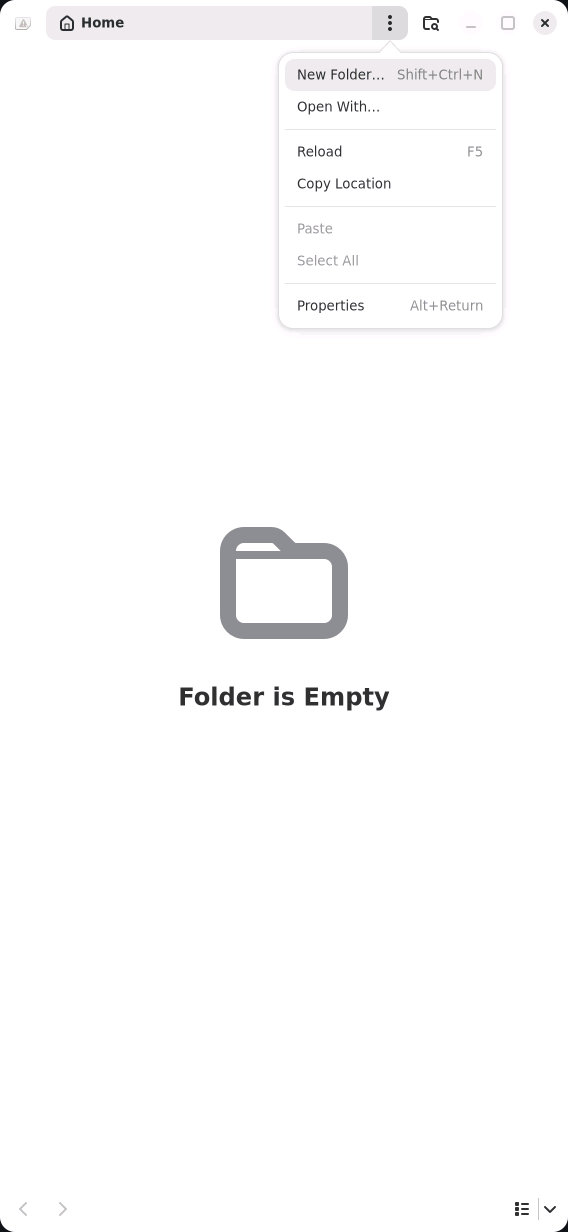
The header probe, after explicitly focusing the real org.gnome.Nautilus window, taps its header menu at (390,23), inside the old stolen top edge band. The native image shows the app menu open; the notification shade did not replace it.
Commands, with the board reservation held (probes staged to the named board paths):
python3 tools/console.py /dev/ttyACM0 --wait=3 'readlink -f /run/current-system; systemctl is-active shell shell-ui k230-touch-trackpad'
python3 tools/console.py /dev/ttyACM0 --wait=12 'timeout -k 2s 35s /nix/store/v189xydz6qkcd4cbkixcmv91w8hbc560-python3-riscv64-unknown-linux-gnu-3.14.7/bin/python3 /root/tmp/k230-deployment/edge-board-check.py'
python3 tools/console.py /dev/ttyACM0 --wait=4 'runuser -u shell -- env SWAYSOCK=/run/shell/sway-ipc.sock timeout 3s swaymsg -r "[app_id=\"org.gnome.Nautilus\"] focus"; timeout -k 2s 20s /nix/store/v189xydz6qkcd4cbkixcmv91w8hbc560-python3-riscv64-unknown-linux-gnu-3.14.7/bin/python3 /root/tmp/k230-deployment/edge-header-check.py'
Original JPEG files were collected with framed serial base64 and inspected visually; result and hashes identify them. An initial unfocused header attempt captured Home and proved no app-control behavior; only the focused rerun is accepted. An overlapping coordinator serial read interrupted the first console wrapper; the independent completed board result and fresh single-reader health query were collected afterward. No failed wrapper is presented as successful console evidence.
This completes deployment/simulated-controls task 4.2. Task 4.3 still requires actual fingers: app header controls, compact search Backspace, Home handle, and top/bottom drags. The original HDMI pointer/four-finger acceptance gate 3.3 remains open. Normal /boot selection still points at the earlier x1xbs5qd system; this userspace switch is not persistent-boot proof.
Matching window identities retained on the board
The additional board pointer check compares the live Sway tree immediately before Home and after tapping its bottom handle into overview. Before/after IDs match exactly for Terminal, Portfolio and Nautilus. This was native board IPC pointer injection, distinct from the uinput touch checks above. The first attempt found the system keyboard still visible over Home and therefore did not activate its covered handle; that attempt is not accepted. After using the normal k230-keyboard-gesture-signal hide helper, the rerun passed. The check left the drawer visible and preserved all three windows.