HDMI trackpad board checkpoint
The corrected relay’s 20-second startup-only dry run succeeds on the real board: HDMI automatically selects Trackpad mode, the real GT9895 axis plan omits invalid pressure, and shutdown releases the grabbed touchscreen. Both shell services remain active. startup-only.json and the whitelisted startup-only.log preserve the command, installed profile and observation.
At that startup-only checkpoint no finger events occurred, so task 3.0 was still open. That run created no uinput device. It established none of pointer movement, tap/click, scrolling, pinch, shell gesture integration or panel-mode restoration. The subsequent trials below supersede this startup-only status. The persistent service was disabled at that checkpoint; its later installation is recorded below.
The prototype and proposal were already merged on master through 6534585eb00a (verified as an ancestor of the shared master), completing the earlier task 4.2 handoff. This checkpoint changes evidence/task reconciliation only.
Real-contact trial
contact-checkpoint.json summarizes the next 20-second dry run: 8,515 raw
events, one-contact and two-contact frames, followed by clean release and
active shell services. The protected source capture is identified by SHA-256
and timestamp; its raw contents are not published. This completes the bounded
grab/read/translate/release safety gate, while recording the tool-code defect
it uncovered. In a subsequent bounded virtual-device trial the operator
reported cursor movement and no tap click. Neither this report nor the serial
capture proves scrolling, pinch, panel restoration, or pixel acceptance.
The follow-up source fixes the multi-finger UAPI codes and enables Sway’s normal tap-to-click configuration for the named virtual touchpad. Host tests, including an independently compiled Linux-header comparison, and both RISC-V relay and coherent-HDMI configuration builds passed. The full hardware gates remain open until their corresponding physical observations are recorded.
tap-configuration.json records the installed corrected system/relay and
Sway’s live classification: tap: enabled, scroll_method: two_finger.
The five-minute transient trial is independently bounded and does not enable
the permanent service. Physical click and scroll acceptance remain pending.
Persistent HDMI service
persistent-service.json and its whitelisted log record the installed
service-enabled HDMI system. k230-touch-trackpad, shell and shell-ui are
active; the relay is enabled at boot, exactly one relay process and one
virtual touchpad are present, and Sway reports tapping enabled with two-finger
scrolling. The bounded transient trial was replaced by this persistent unit.
The filtered shell journal shows none of the original invalid-absinfo/libinput
errors during this observation. No reboot or panel-mode test was performed.
Physical click/scroll/pinch acceptance and pixel evidence remain open.
Shell pointer dispatch and launcher proof
The Rust shell previously subscribed only to touch and keyboard, so the
virtual touchpad’s clicks could not reach its UI. It now subscribes to
wl_pointer and shares contact actions with touch. Host checks and exact
source hashes are in pointer-host-checks.json.
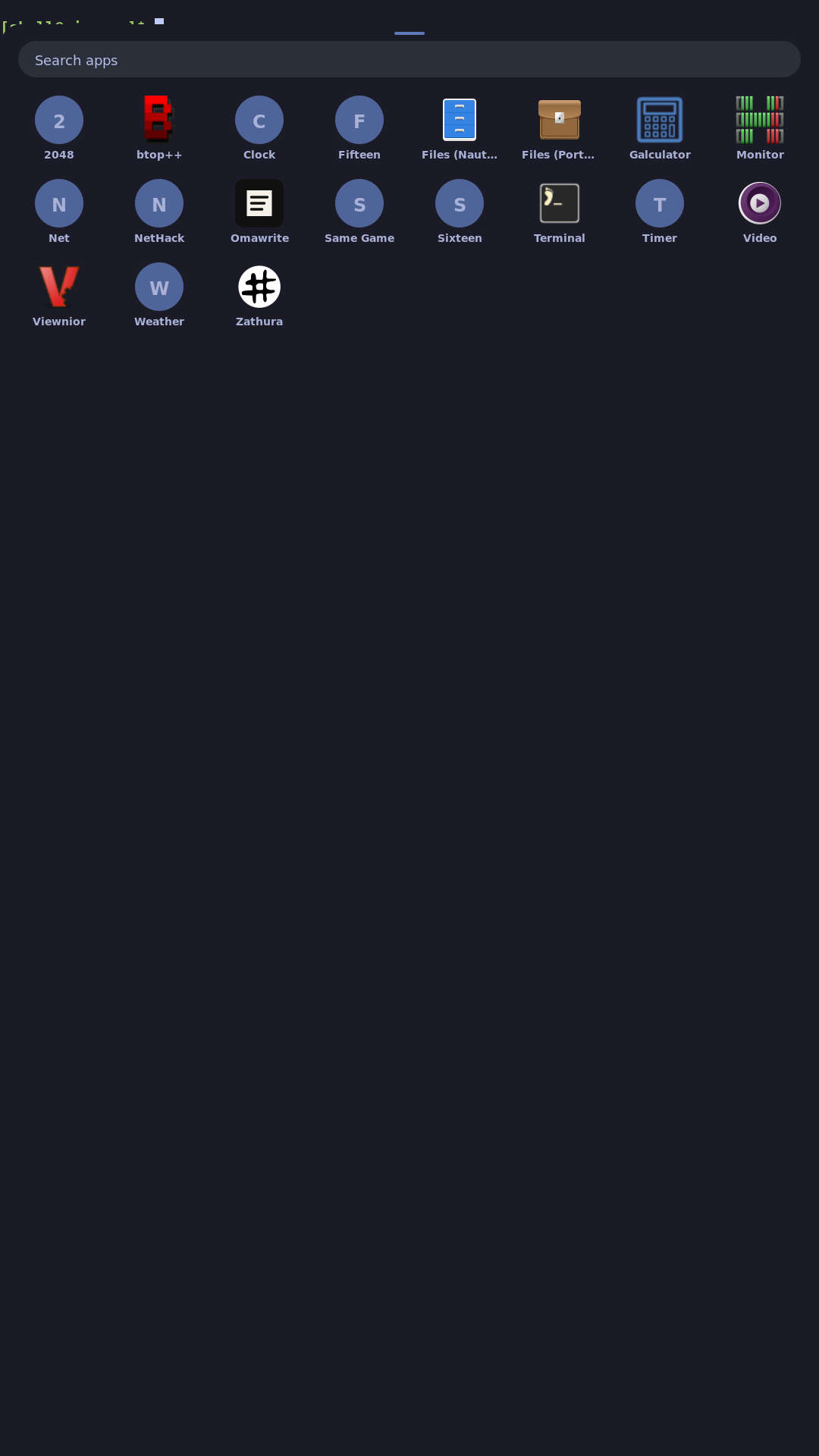
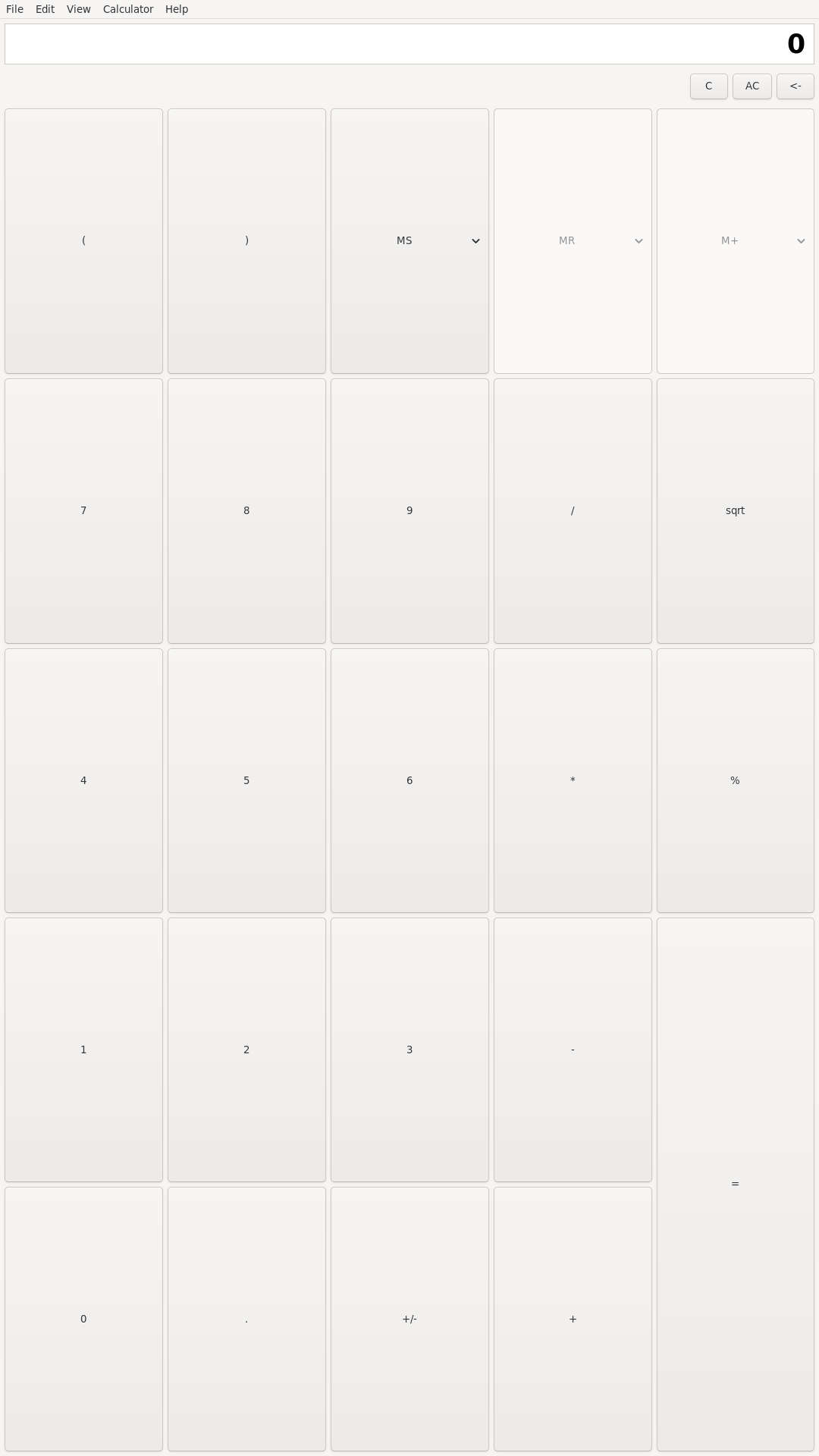
On the physical board, the injected standard Wayland pointer click recorded
in pointer-launch.json produced pointer-down/up and opened a focused
galculator window. The native before/after captures were visually reviewed:
launcher, opened Calculator.
This proves client dispatch and on-board app presentation, while leaving the
real-finger launcher acceptance gate open.
A device-scoped four-finger inward pinch binding is accepted by live Sway IPC.
The persistent configuration uses Sway’s normal bindgesture path; it does
not change the compositor’s touch mapping. Real four-finger recognition and
overview presentation remain a separate physical gate.
overview-binding.json records the final installed system, generated Sway
configuration, running services and pointer capability. The configuration
places pinch:4:inward card_shell enter inside Sway, scoped to the virtual
touchpad derived from the board’s touchscreen. The initial misplaced binding
was rejected by host Bash checking and corrected before installation.
This checkpoint establishes deployment and parsing, not a real four-finger
pinch or reboot acceptance.