Initial compositor scene with panel readiness
The corrected opt-in splash image seeds Sway before its first output commit and retires that seed after the terminal and actual Swaybar panel are ready. The physical warm-boot recording does not reproduce the earlier 1.1–1.2 second dark interval in the sampled transition. This remains an opt-in candidate; it is not cold/battery-boot or real-touch acceptance.
Build and deployment
Build provenance identifies diagnostic image source 12c1b0e,
image SHA-256 df47afb9a6a777c5e5c649e3829d563a6b5850443e19373e1cdc3fb44c28eb39,
and compositor source 56b60c7. The integration build
produces the same kernel and optional compositor from the carried source.
Default evaluation confirms panelConsole=true,
initialSplash=false, ordinary Sway, and no splash environment in the daily
service. Flash transcript records successful image write,
reset, Linux boot and USB host checks. Routine full readback was skipped;
no home backup or network credentials were restored.
Automatic handoff
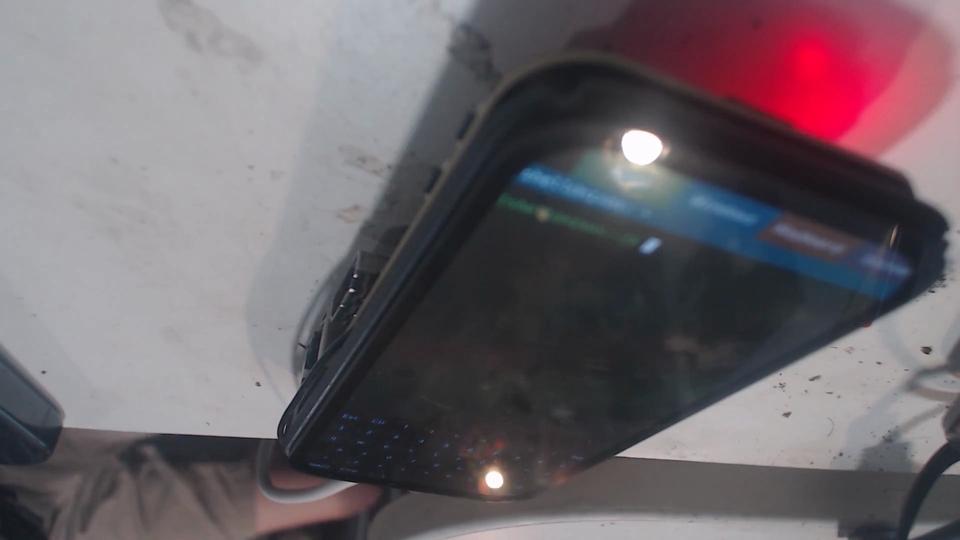
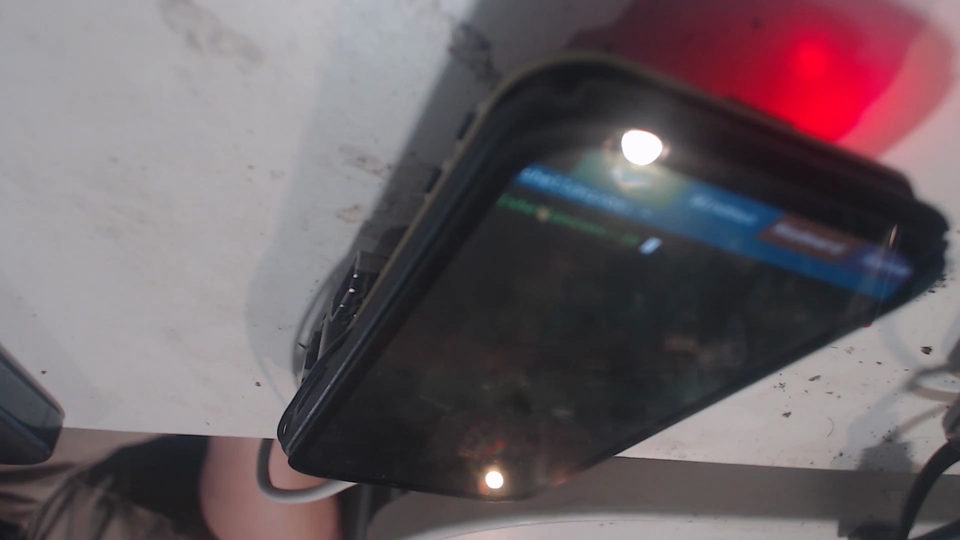
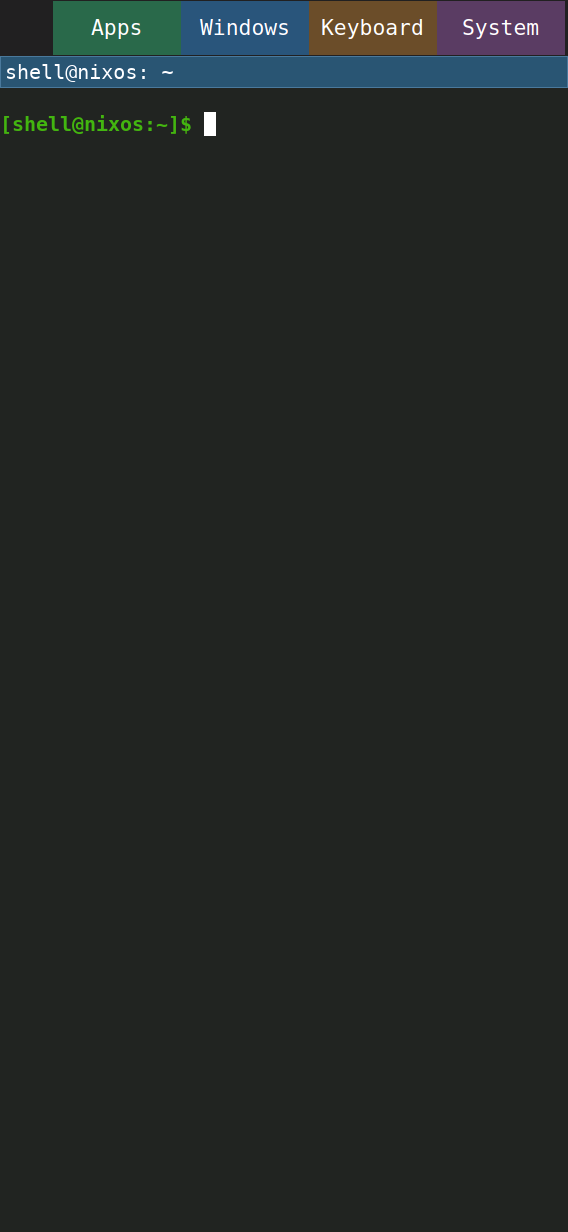
The 120-second boot video and camera audit place the sampled transition around 72.6–72.7 seconds. The physical shell frame shows portrait controls without the earlier obvious wrap or magenta swap. The native frame separately records compositor output. Camera sampling does not exclude shorter unobserved transitions, establish uninterrupted electrical scanout, or calibrate geometry and color.
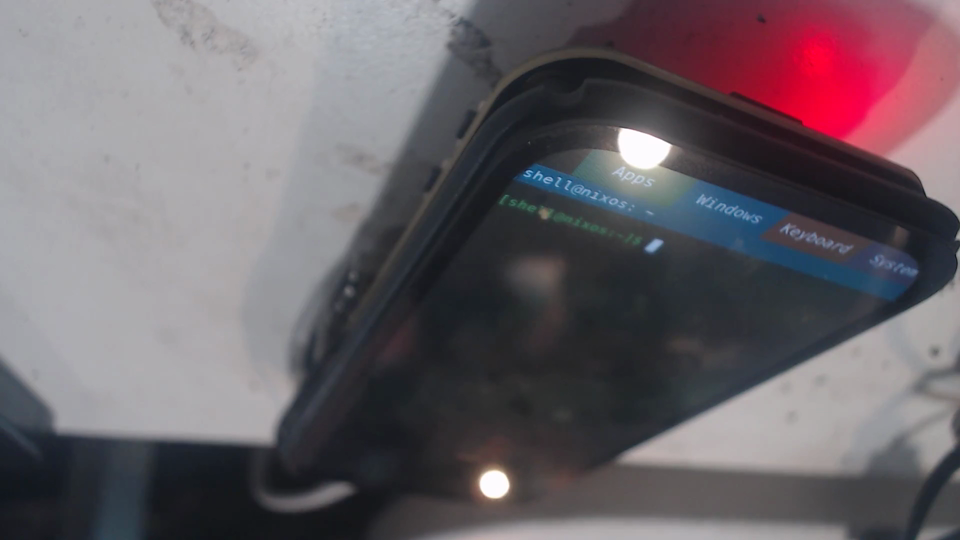
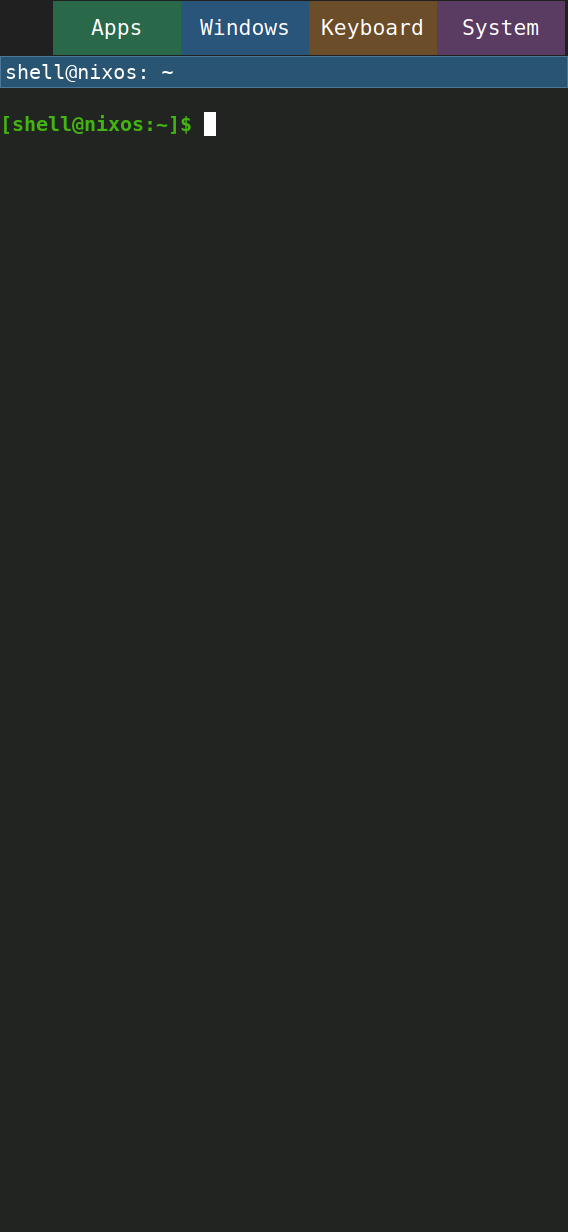
Runtime inspection records shell, seatd and firewall active,
the flag present, no fb0, first VO/DSI preservation, and the DRM owner releasing
only after its framebuffer is replaced. Sway logs both initial splash seeded
and initial splash removed, with replacement commit_seq=6. The first trial
used the wrong top-layer bar predicate and never retired its seed; this image
uses Swaybar’s mapped bottom-layer panel surface and an actual view surface.
Presentation logs alone are not proof of what appeared on the glass.
Recovery and controls
The 65-second controls video
uses serial commands, not finger input. keyboard-show.txt and
keyboard-hide.txt record explicit keyboard signals; the
keyboard native frame shows the complete keyboard.
The camera’s oblique reflective view limits physical key-label acceptance.
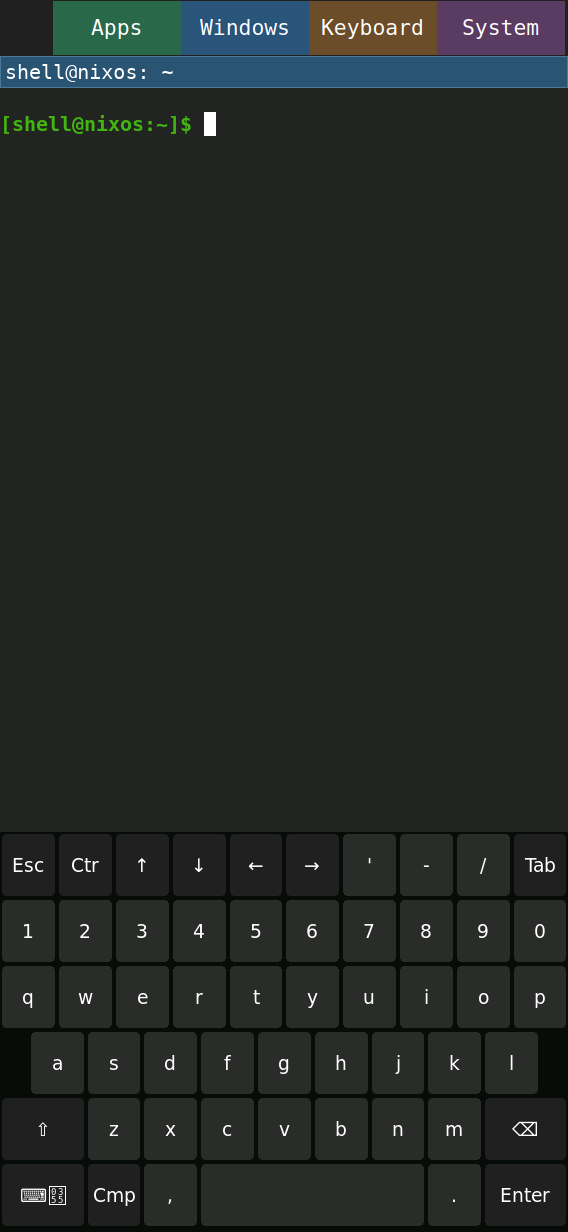
Display off/on transcript records a deliberate three-second power-off and normal full panel prepare afterward. Shell, seatd and firewall remain active. The diagnostic panel-ID and power-mode reads still report errors; this is not proof those reads work. The post-recovery native frame records the recovered shell. The controls camera audit observes the deliberate dark interval around 29–32 seconds and the returning shell around 32–33 seconds, while leaving physical keyboard-label acceptance unresolved.
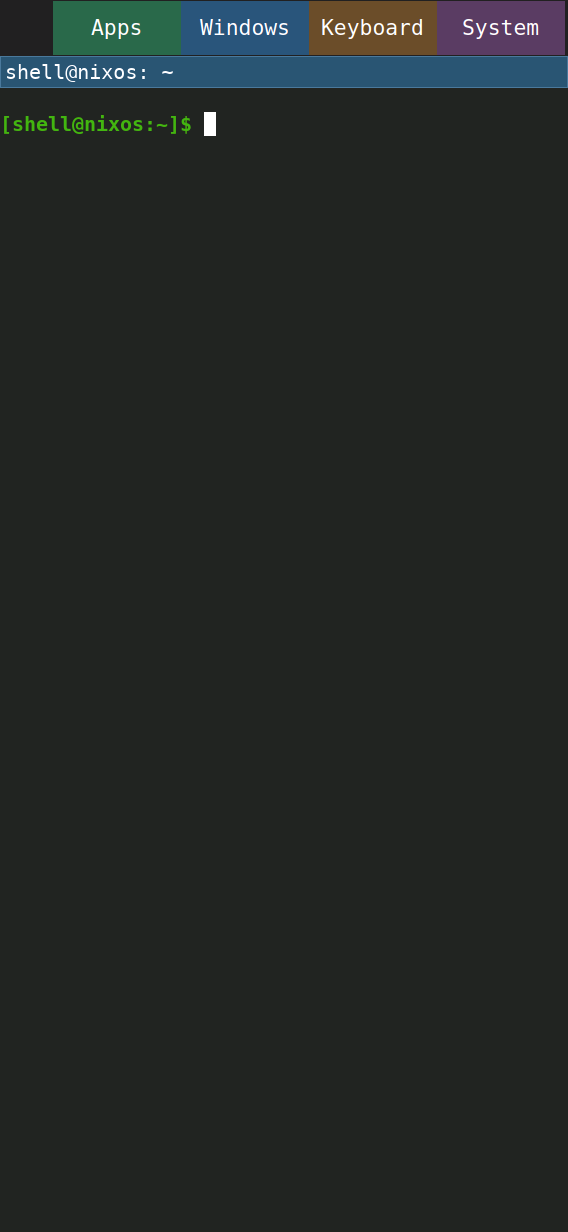
The unchanged asset loader was tested with a missing path and three-byte file in the preceding scene trial: both produce specific diagnostics and a usable shell. Its temporary overrides were removed. The same kernel’s missing-logo console and later full-prepare regressions are recorded in the preservation trial.
Keyboard visibility follow-up
The focus-30 recording
resolves the repeated lower-panel key pattern while it is shown, followed by
its disappearance after hide. See the camera audit,
shown frame, and
hidden frame. This is visibility evidence;
individual label readability, calibrated geometry and real-finger accuracy
remain outside this result. The keyboard theme and image were unchanged.
keyboard-visible-show.txt and keyboard-visible-hide.txt identify the serial
signals. The restored native frame
records the terminal back in its tiled layout with the keyboard hidden.
Tasks 5a.1–5a.3 now have build, review and physical regression evidence: automatic boot and first shell, keyboard visibility, and display off/on. Task 5.4 still requires its specified complete power-on evidence. No animation or persistent simulation state is implemented here.